
Seals – real acrobats in the water
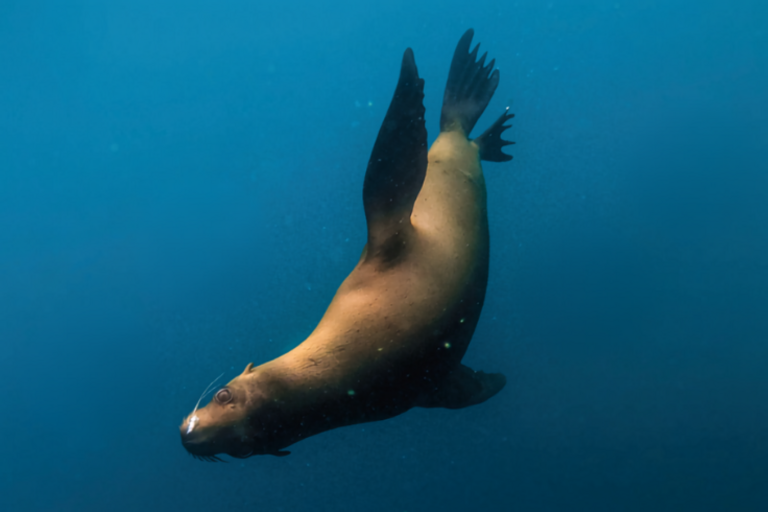
On land, seals sometimes seem a bit clumsy, but in the water they can show off their acrobatic skills with their specially adapted bodies.
- Smooth, water-repellent fur
- Sufficient oxygen in their blood for long dives
- Reduced water resistance thanks to a streamlined body
- Powerful flippers for excellent propulsion and good manoeuvrability
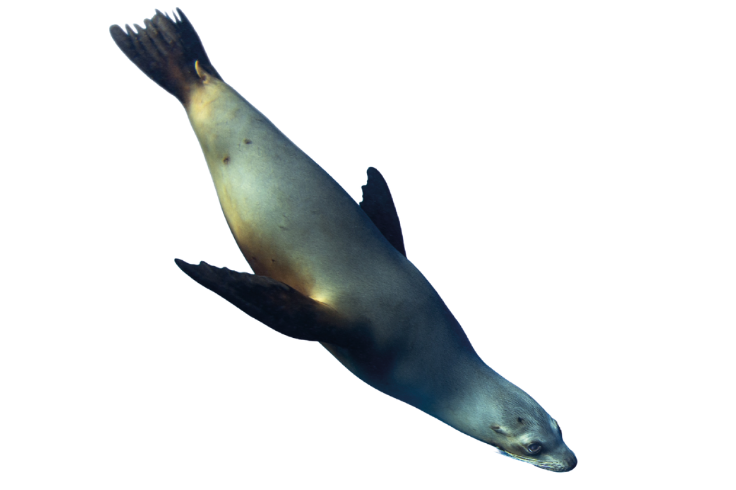
Like a dart through the water
Thanks to its streamlined body shape and the smooth surface of its fur, the seal creates little resistance when swimming, enabling it to swim fast and far before getting tired. This helps it when hunting food or escaping predators.

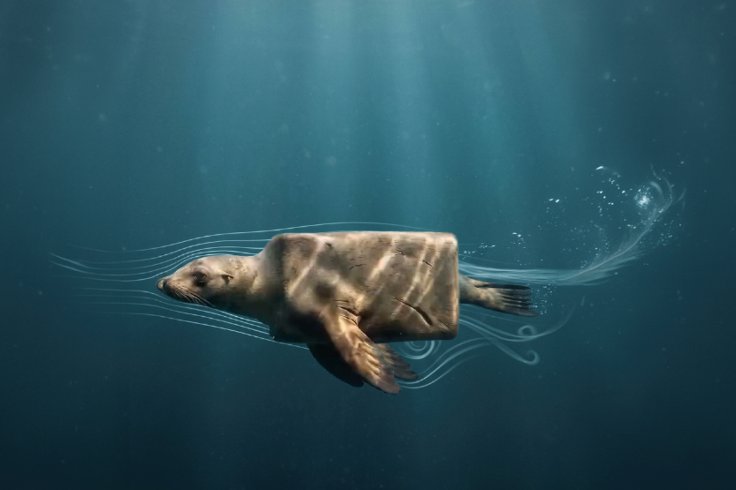
The role of whiskers when hunting food
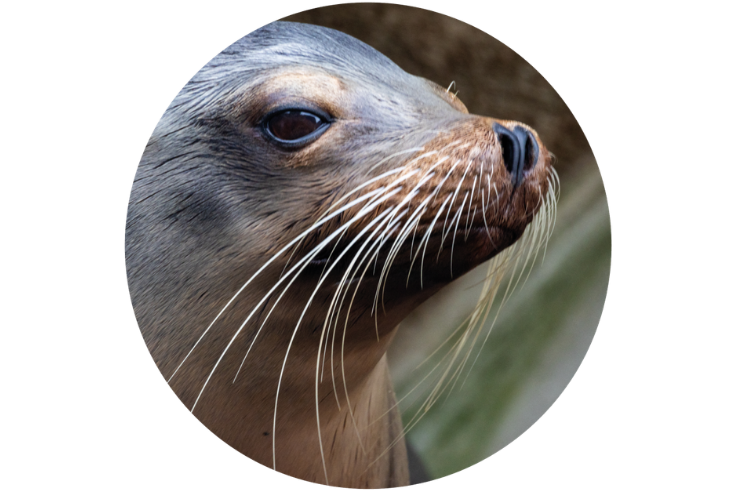
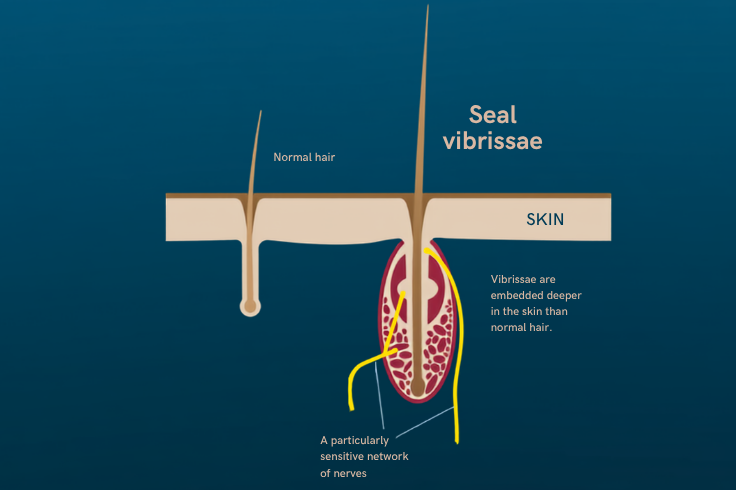
Seals’ whiskers are called vibrissae and are a real super-sense organ. They combine a highly sensitive sense of touch with an underwater radar for detecting currents.
Tactile perception: Like long, thin sensor rods, they can scan and detect objects – in a similar way to our fingertips.
Hydrodynamic perception: The vibrissae detect the smallest movements in water from swimming animals, enabling them to perceive the direction, distance and even the approximate size of their prey – even in complete darkness.